

Wire bonding failures don't happen by accident, and blaming machines or operators misses the real problem. The root cause is almost always the surface itself: contamination, oxidation, or low surface energy that prevents reliable adhesion.
Even the most advanced bonding techniques can't overcome a surface that isn't ready.
Understanding and controlling this invisible factor is the key to stronger bonds, consistent yields, and zero-defect manufacturing.
In this article, we'll show how proper surface preparation, specifically vacuum plasma cleaning, transforms wire bonding from a gamble into a predictable, high-performance process.
The Real Cause of Wire Bonding Failures
When wire bonding issues appear, the immediate assumption is often that the wire bonding machine is misaligned or that operator error is to blame. While these factors can play a role, they are rarely the root cause of persistent failures.
In most cases, the real problem lies at the surface level.
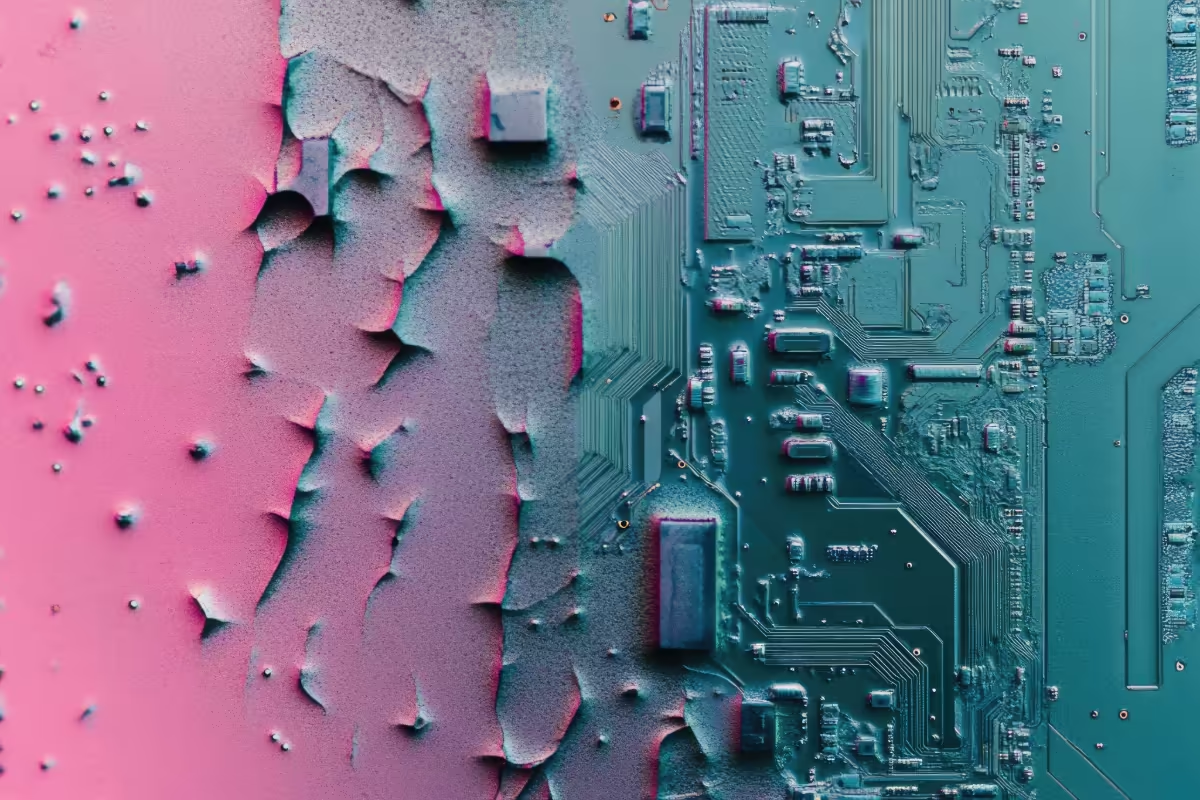
Contamination such as oxides, organic residues, and microscopic particles creates a barrier that prevents proper adhesion. At the same time, low surface energy, often indicated by a high contact angle, reduces wettability and limits bond formation.
The result is weak bonded wire performance and inconsistent electronic device bonding. If the surface condition is not properly addressed, no adjustment to the bonding process will deliver reliable results.
What Is Wire Bonding Responsible For in Your Process?
Wire bonding in microelectronics is the final step where electrical connections are physically formed, making it the point where hidden process issues become visible. While it is often viewed simply as the method that connects components, its real role is far more revealing.
It acts as a checkpoint for the entire manufacturing process, exposing upstream problems such as surface contamination and oxidation. When conditions aren't right, failures show up here first as weak or inconsistent bonds.
In reality, wire bonding doesn't create the problem, it highlights it, making surface preparation critical to achieving reliable, repeatable results.
How Surface Contamination Destroys Bond Integrity
Surface contamination directly interferes with bond formation, turning what should be a stable connection into a point of failure. Even at a microscopic level, small surface inconsistencies can have a measurable impact on performance and reliability.
- Oxidation: Blocks intermetallic formation, preventing a strong metallurgical bond
- Organic contamination: Acts as a barrier, stopping proper adhesion between materials
- High contact angle (>50°): Indicates low surface energy and poor wettability
These conditions lead to:
- NSOP (non-stick on pad) failures
- Low pull and shear strength in bonded wire connections
- Early-life product failures in the field
In many cases, untreated surfaces show contact angles above 60°, while properly treated surfaces drop below 20°, significantly improving bond strength and consistency.
The Fix: Plasma Cleaning Before Wire Bonding
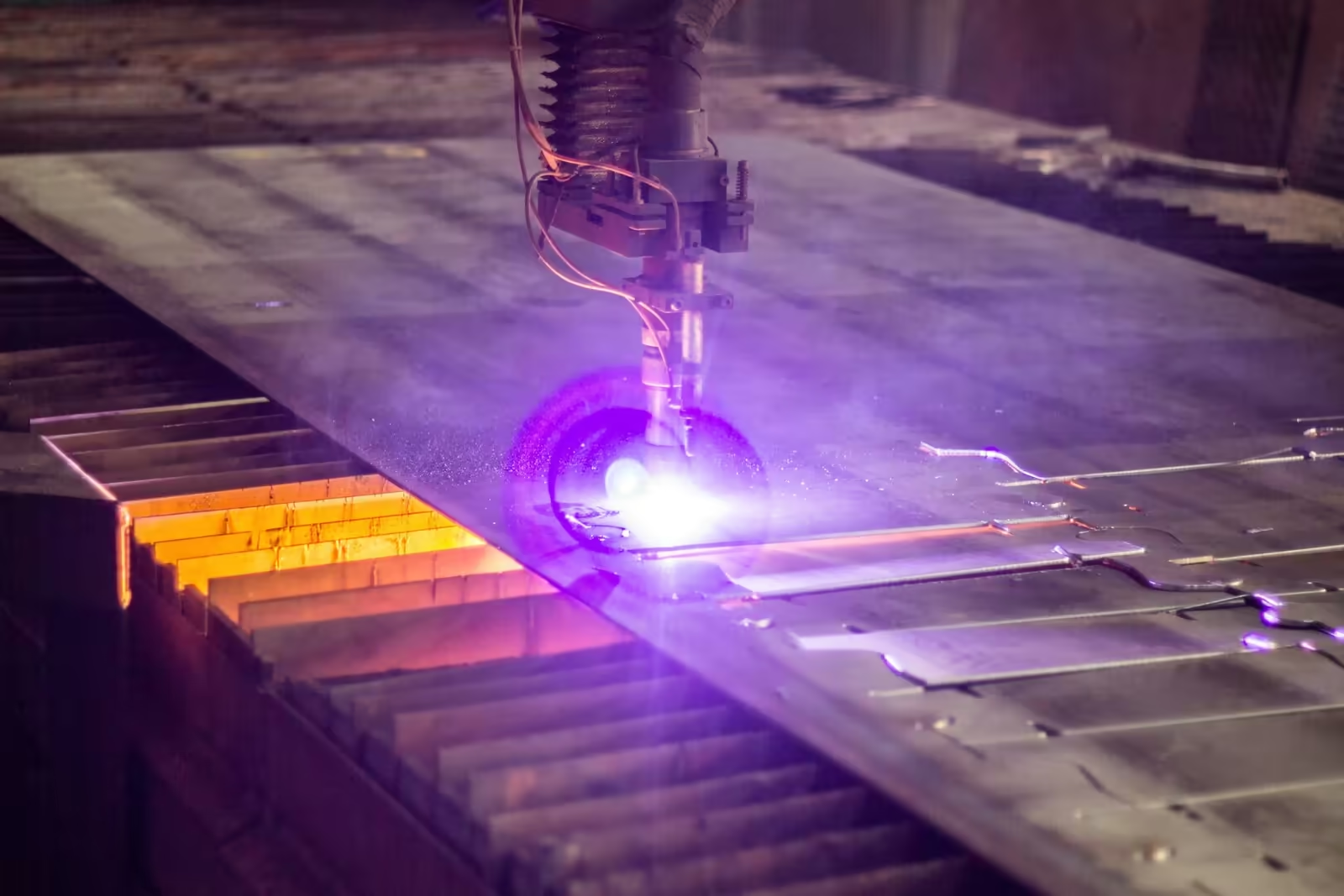
The most effective way to eliminate wire bonding failures is to address the problem before bonding even begins. Vacuum plasma cleaning is a pre-treatment step that targets contamination at its source, creating the ideal surface conditions for strong, reliable bonds. Instead of trying to compensate for poor results at the wire bonding stage, plasma treatment ensures the surface is fully prepared for consistent performance.
By introducing a controlled plasma environment, the process works at an atomic level to both clean and activate the surface.
- Removes contamination: Eliminates oxides, organic residues, and particulates that block adhesion
- Increases surface energy: Lowers contact angle, improving wettability and bond formation
- Activates the surface: Enhances interaction between materials for stronger intermetallic bonds
The result is a measurable shift in performance:
- Stronger, more reliable bonds with higher pull and shear strength
- Elimination of NSOP (non-stick on pad) failures
- Consistent results across batches, even in high-volume production
With plasma cleaning in place, wire bonding becomes a controlled, repeatable process, transforming it from a point of failure into a point of confidence.
What Changes After Plasma Treatment
Once plasma treatment is introduced, the difference in wire bonding performance is immediate and measurable. Instead of managing defects, manufacturers gain control over consistency, strength, and overall yield.
Before Plasma
Untreated surfaces create unstable bonding conditions that lead to inconsistent results and higher failure rates.
- High contact angle (~60°+) indicates poor wettability and low surface energy
- Weak bonds with low pull and shear strength
- Frequent NSOP (non-stick on pad) issues
- Delamination and early-life failures impacting product reliability
After Plasma
Plasma-treated surfaces provide the ideal conditions for strong, repeatable bonding.
- Contact angle <20°, significantly improving surface energy
- 3x+ increase in bond strength, ensuring mechanical and electrical reliability
- 0% NSOP, eliminating one of the most common bonding failures
- No delamination, resulting in stable, long-term performance
The result is a clear improvement in yield, fewer rejected units, and more reliable end products in the field.
Where Plasma Fits Into Your Existing Wire Bonding Process
Integrating plasma cleaning into your existing wire bonding process is straightforward and does not require a complete overhaul of your production line. Instead, it is introduced as a pre-treatment step before bonding, ensuring surfaces are properly prepared without disrupting downstream operations.
Depending on your manufacturing setup, plasma systems can be configured to suit different production needs.
Inline systems are ideal for high-volume environments, allowing continuous processing with minimal operator intervention. Batch systems offer flexibility, making them suitable for varied product sizes or lower production volumes. For applications requiring high precision, particularly with lead frames, strip plasma systems deliver uniform and repeatable treatment.
Despite its impact on performance, plasma cleaning operates with fast cycle times (often within seconds) ensuring throughput is maintained. This means manufacturers can significantly improve bonding reliability without sacrificing efficiency or slowing production.
Choosing the Right Plasma System for Your Application
Selecting the right plasma system depends on your production environment, product design, and throughput requirements. The goal is not just to introduce plasma cleaning but to ensure it aligns seamlessly with your process for maximum efficiency and performance.
For high-volume manufacturing, inline plasma systems such as the QML range are designed to integrate directly into production lines. These systems support continuous processing, making them ideal for industries where speed, automation, and consistency are critical.
When working with complex geometries or varied product sizes, batch systems like Juno or Atlas provide greater flexibility. These systems are particularly effective for treating intricate components where uniform plasma exposure is essential.
The Atlas plasma cleaning system is especially well-suited for demanding applications such as desmearing and deep surface cleaning, offering reliable performance across semiconductor, automotive, and electronics industries.
For lead frame applications requiring high precision and uniformity, systems like Quadrio Alpha deliver consistent, per-frame processing to ensure optimal bonding conditions.
By matching the right system to your application, plasma treatment becomes a fully optimized part of your manufacturing process rather than just an added step.
Why Traditional Cleaning Methods Keep Letting You Down
Many manufacturers rely on conventional cleaning methods, yet still experience inconsistent wire bonding results. The issue isn't always the process itself, it's the limitations of these approaches at a microscopic level.
- Wet cleaning: Uses chemicals that can leave behind residue or introduce moisture, leading to corrosion and poor adhesion
- Mechanical cleaning: Risks damaging delicate surfaces or introducing new contaminants during contact
- UV cleaning: Limited to surface-level treatment and often ineffective on embedded or complex contamination
These methods may appear effective, but they fail to consistently prepare surfaces for high-reliability bonding.
In contrast, vacuum plasma cleaning offers a more advanced solution:
- Dry process with no chemical residue
- Non-destructive, preserving sensitive materials
- Highly effective at a micro-level, removing contaminants and activating surfaces simultaneously
This shift in approach is what enables consistent, high-performance bonding outcomes.
The Business Impact: From Yield Loss to Zero-Defect Manufacturing
When surface preparation is properly addressed, the impact on production is immediate and measurable. Wire bonding failures are in fact predictable outcomes of poor surface conditions. By eliminating contamination through plasma treatment, manufacturers can move from reactive problem-solving to controlled, high-yield production.
The result is a significant improvement in semiconductor wire bonding reliability, with failure rates reduced to near zero. This directly translates into fewer rejected units, reduced rework, and lower overall production costs. At the same time, fast plasma cycle times ensure throughput remains high, supporting the demands of modern automotive and electronics manufacturing.
More importantly, this shift improves the long-term performance and durability of end products, reducing the risk of field failures.
SCI Plasma goes beyond supplying equipment, we partner with manufacturers to solve surface challenges at the source. Contact us at SCI Plasma and let us assess your surface to recommend the right plasma solution.