

Manufacturing throughput is often treated as a speed problem, but in reality, it's frequently a surface problem. When production slows, defects increase, or yield drops, and the root cause is not always visible on the factory floor.
Microscopic contamination, oxidation, and poor surface energy can quietly undermine even the most advanced manufacturing processes, creating hidden bottlenecks that limit output and efficiency. In high-performance environments, these small disruptions scale into significant losses in time, cost, and competitiveness.
Understanding what is truly restricting throughput is the first step toward solving it and unlocking a more reliable, high-yield production process.
What Is Throughput in Manufacturing?
Throughput in manufacturing refers to the rate at which finished products are produced over a specific period of time. In simple terms, it measures how many units move successfully through a production process from start to completion.
As a core KPI in high-performance manufacturing environments, throughput directly reflects how efficiently operations are running. Higher throughput means more products delivered in less time, which improves profitability, supports reliable delivery timelines, and strengthens a company's competitive position in the market.
However, achieving consistent throughput is not only about speeding up production. Many inefficiencies originate much earlier in the process (often at a microscopic level) where unseen issues can disrupt flow, reduce output, and ultimately limit overall manufacturing performance.
Understanding the Throughput Formula in Manufacturing
Understanding the throughput formula helps manufacturers move from guesswork to measurable improvement. At its core:
Throughput = Total Units Produced ÷ Time
This simple equation reveals how much output a process delivers within a given timeframe. However, real-world throughput is influenced by far more than production speed.
Factors such as equipment downtime, material delays, defects, rework, and process inefficiencies all reduce the number of usable units produced. As a result, improving throughput isn't just about accelerating operations; it's about identifying and eliminating the failure points that disrupt flow and prevent consistent, high-quality output across the entire manufacturing process.
How Surface Contamination Reduces Throughput
Surface contamination is one of the most overlooked factors impacting manufacturing throughput, yet it often sits at the root of persistent production issues. Organic residues and oxidation layers can remain on material surfaces even after standard cleaning processes, creating invisible barriers to proper bonding. These contaminants directly contribute to defects such as delamination between materials, weak wire bonds that fail under stress, and underfill voids that compromise structural integrity and thermal performance.
The result is not just isolated quality issues but a cascade of operational setbacks, including products requiring rework, defective units being scrapped, and production lines experiencing unplanned delays. Over time, these disruptions significantly reduce overall throughput.
Rather than being a surface-level inconvenience, contamination is a foundational problem that undermines process reliability, making it essential to address at the source to achieve consistent, high-efficiency manufacturing outcomes.
Why Traditional Cleaning Methods Fall Short
While many manufacturers rely on conventional cleaning methods, these approaches often fail to address contamination at the level required for high-performance production. As a result, hidden surface issues persist, limiting both quality and throughput.
- Wet cleaning: Wet cleaning typically uses chemical solvents or detergents to remove contaminants from surfaces. While effective for visible debris, it often leaves behind residue or moisture that can interfere with adhesion. This can lead to corrosion, inconsistent bonding, and ongoing contamination risks, especially in sensitive manufacturing environments.
- UV cleaning: UV cleaning works by breaking down organic contaminants using ultraviolet light. However, its effectiveness is limited to surface-level impurities and does not address fragments embedded within materials. Additionally, certain materials can degrade when exposed to prolonged UV radiation, making it unsuitable for some applications.
- Mechanical methods: Mechanical cleaning methods, such as brushing or polishing, physically remove contaminants but can damage delicate surfaces or introduce new residue. These abrasive techniques lack precision and consistency, particularly for complex or microscopic structures.
These limitations highlight the need for a more precise, repeatable solution that can reliably eliminate contamination without compromising material integrity.
How Vacuum Plasma Treatment Improves Manufacturing Throughput
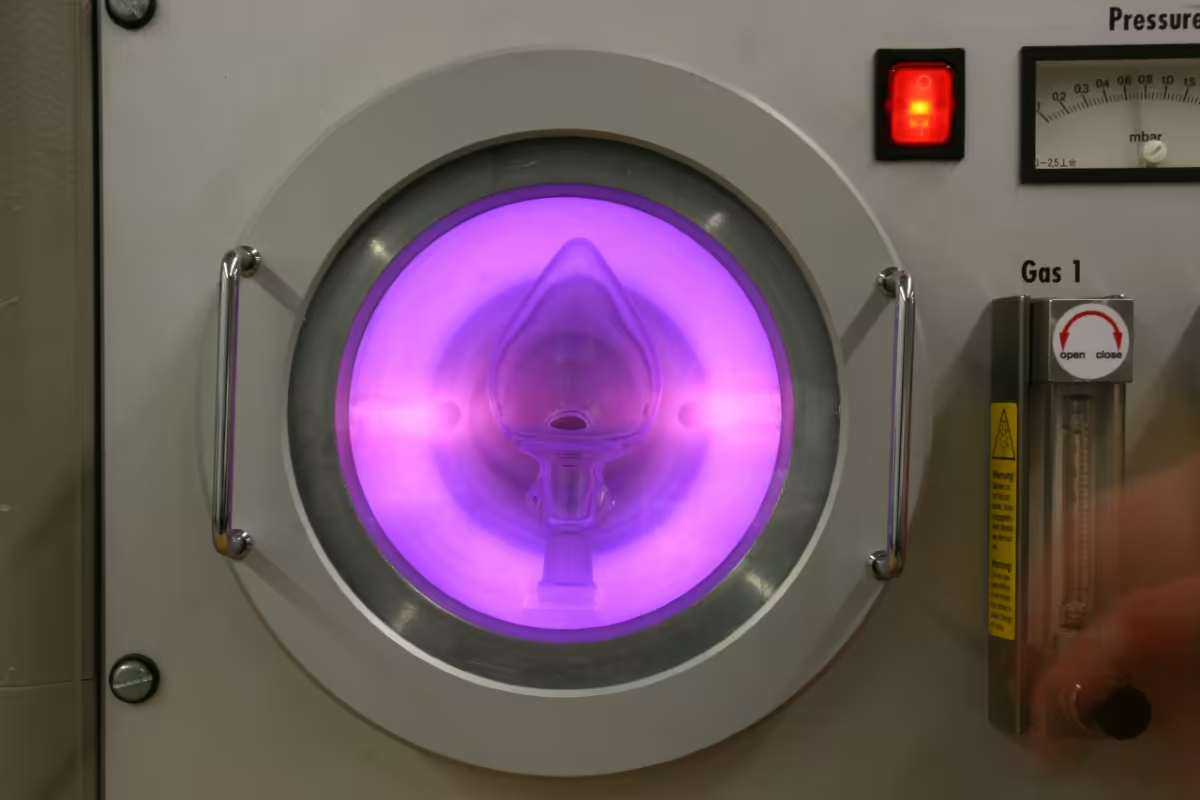
For manufacturers looking at how to improve throughput without compromising quality, vacuum plasma treatment offers a highly effective solution. Rather than relying on surface-level cleaning, this technology works at a microscopic level to remove organic contaminants, oxidation, and embedded fragments that traditional methods often miss.
By creating a highly controlled environment, plasma treatment activates the surface, significantly increasing surface energy and transforming it from a low-energy, non-reactive state into one that supports strong, reliable adhesion.
This improvement in surface condition has a direct impact on production performance. With cleaner, more reactive surfaces, processes such as wire bonding, coating, and molding become far more consistent and predictable. The result is a substantial reduction in defects like delamination, weak bonds, and void formation. As defects decrease, so does the need for rework and scrap, allowing production lines to operate more efficiently.
Ultimately, manufacturers can increase throughput in manufacturing not by speeding up individual steps, but by eliminating the disruptions that slow everything down. The outcome is a smoother, faster process flow with higher yield and more reliable output.
From Low Yield to High Throughput Manufacturing
Moving from low-yield to high-throughput manufacturing requires more than incremental improvements, it demands a shift in how surface preparation is approached. Vacuum plasma treatment delivers measurable, process-level gains that translate directly into production performance.
- Reduced contact angle and improved wettability: Surfaces become more receptive to bonding, enabling uniform material interaction and stronger adhesion.
- Stronger wire bonds: Improved surface activation results in higher pull strength and more reliable electrical connections.
- Elimination of delamination: Clean, activated surfaces prevent separation between layers, ensuring structural integrity throughout the product lifecycle.
These technical improvements drive meaningful business outcomes. Manufacturers experience higher yield rates as fewer units are rejected, along with more consistent production output due to reduced variability in critical processes. In addition, lower failure rates in the field enhance product reliability and reduce warranty or replacement costs.
Rather than acting as just another cleaning step, plasma treatment becomes a critical enabler of high-throughput manufacturing; supporting faster, more stable, and more scalable production.
Matching the Right Plasma System to Production Needs
Selecting the right plasma system is essential for maximizing throughput, as different production environments require different balances of flexibility, speed, and precision. Aligning the system with your operational needs ensures consistent performance and optimal output.
Batch Production
Batch plasma systems are ideal for environments that require flexibility, especially when handling a variety of part sizes and geometries. They allow multiple components to be processed simultaneously, making them well-suited for lower-volume or more complex production.
While not as fast as continuous systems, batch processing provides controlled, consistent results that support quality-driven throughput.
Inline Production
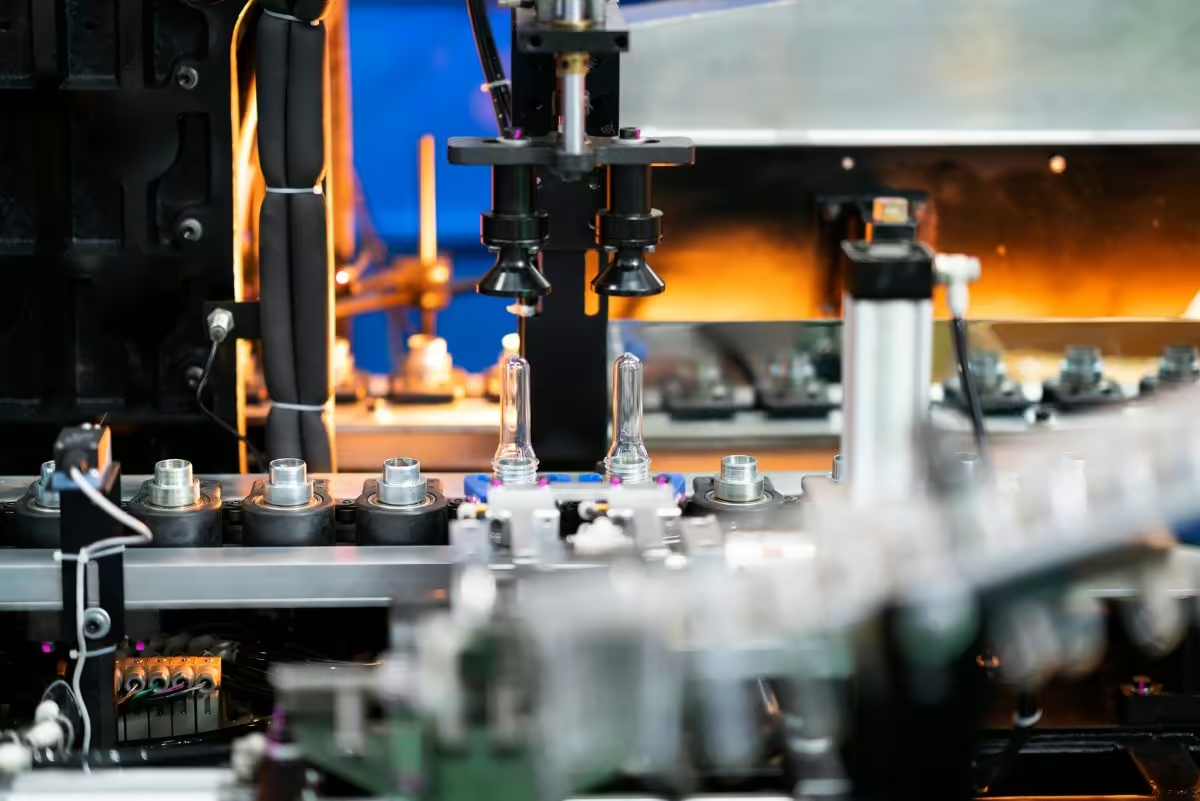
Inline plasma systems are designed for high-volume, continuous manufacturing environments where speed is critical. Components move seamlessly through the process, enabling rapid cleaning and surface activation without interrupting production flow. This setup maximizes efficiency and is best suited for operations focused on achieving high throughput at scale.
Strip Production
Strip systems offer precision processing for flat components such as lead frames. By treating each unit individually, they deliver exceptional uniformity and control, making them ideal for applications where consistency is critical to maintaining throughput and product quality.
| System | Suits | What you gain | What you give up |
|---|---|---|---|
| Batch | Varied part sizes and geometries; lower-volume or complex production | Flexibility — many components processed together in one controlled cycle | Slower than a continuous system |
| Inline | High-volume continuous manufacturing where speed is critical | Components move through without interrupting production flow | Less flexible across mixed part types |
| Strip | Flat components such as lead frames | Exceptional uniformity and control — each unit treated individually | Limited to flat, strip-format parts |
The ROI of Throughput Optimization
Improving manufacturing throughput has a direct and measurable impact on overall return on investment. By reducing defects and eliminating the root causes of inefficiencies, manufacturers can significantly decrease material waste and minimize the need for rework, resulting in a lower cost per unit. Faster, more stable processes also lead to shorter cycle times, allowing more products to be completed within the same production window.
Beyond financial gains, operational benefits further strengthen ROI. Vacuum plasma treatment requires minimal consumables compared to traditional cleaning methods, integrates seamlessly into cleanroom environments, and reduces environmental impact by eliminating chemical waste.
These efficiencies not only lower ongoing operational costs but also support more sustainable manufacturing practices.
As production demands grow, these improvements scale with the business, enabling long-term, high-performance manufacturing without compromising quality or efficiency.
Solving Throughput Challenges at the Source
Many manufacturing throughput challenges can be traced back to issues that aren't immediately visible, like microscopic surface contamination that disrupts critical processes and limits overall efficiency. While these problems may appear as isolated defects, they often stem from a common root cause that continues to impact production if left unaddressed.
Vacuum plasma treatment provides a reliable and scalable solution by targeting contamination at its source, enabling cleaner surfaces, stronger adhesion, and more consistent results across the entire production line. By addressing these foundational issues, manufacturers can unlock higher throughput, improved yield, and greater operational stability.
If you're looking to optimize your process, now is the time to evaluate where hidden inefficiencies may exist and explore how SCI Plasma can help you achieve your manufacturing goals.