

Plasma Cleaning for Adhesive Bonding
A bonded joint that lets go under stress rarely started as a bad adhesive. It started as a surface the adhesive was never given the energy to wet.
When a bonded assembly fails — a delaminated joint, a seal that lets moisture in, a structural bond that lets go under vibration or thermal cycling — the adhesive itself is rarely at fault. Epoxies and structural adhesives are formulated and qualified to hold up under exactly the stresses they're failing under. What usually gives way first is the surface underneath the bond line: a substrate the adhesive was never given the surface energy to properly wet, whether that's an inert plastic, an oxidised metal, or a part still carrying mould-release film or handling oils from the step before.
Why adhesive bonds fail on unprepared surfaces
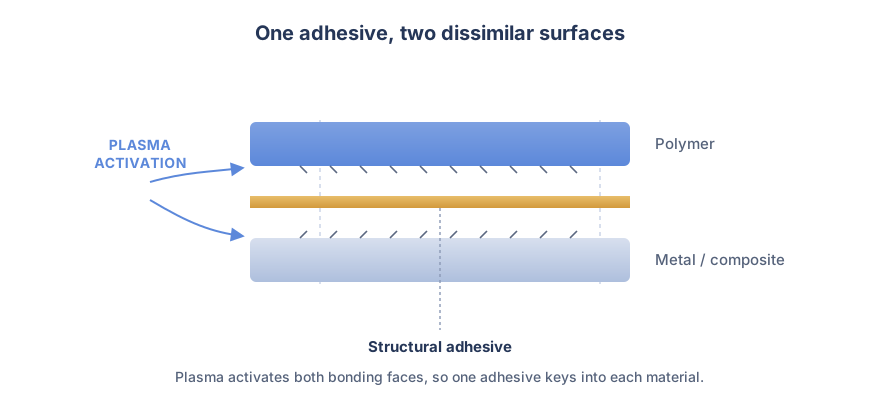
Adhesive bonding depends on two things happening at the interface: the liquid adhesive has to wet the surface — spread into full, continuous contact rather than beading or pulling back — and the surface has to be chemically reactive enough for the cured adhesive to key into it. Low-surface-energy materials work against both. Non-polar polymers like polyethylene, polypropylene and PTFE are chemically inert by design, with no functional groups on the surface for an adhesive to bond to, so a bead of epoxy sits on top of them much the way water beads on a waxed surface. Contamination compounds the problem on any substrate — oils, dust and mould-release residue sit as a physical layer between the adhesive and the part, and no amount of clamping pressure or cure time compensates for a bond line that never made real contact with the base material.
How plasma treatment prepares the surface for bonding
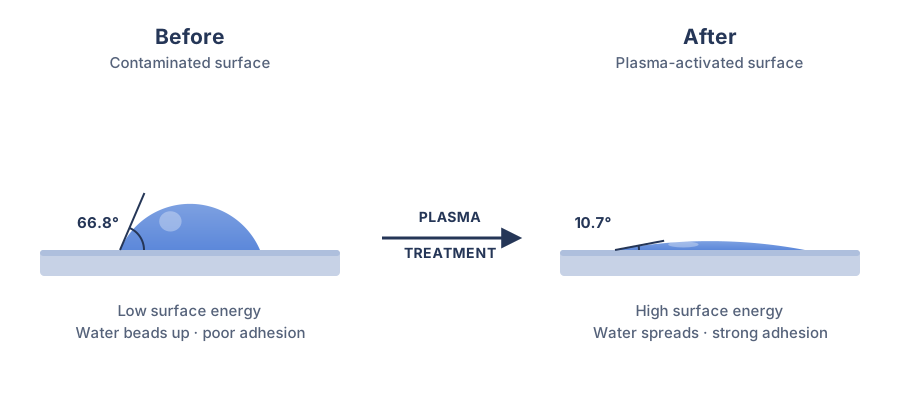
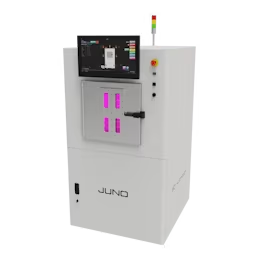
Plasma cleaning addresses the interface directly, ahead of the adhesive dispense step. Inside a vacuum chamber — an Aeon or a Juno, for example — a process gas is ionised into a mix of ions, electrons and reactive neutral species. Those energetic particles remove surface contaminants through a combination of physical sputtering and chemical reaction: argon is the standard choice for straightforward cleaning, while oxygen reacts with and oxidises organic residues directly. The same plasma exposure does two more things at once — it microscopically etches the surface, increasing roughness and giving the adhesive more area to mechanically key into, and it raises the surface energy of the material, making it more chemically reactive toward the adhesive. For inert, non-polar plastics in particular, this second effect is the one that matters most: surface activation introduces polar functional groups the polymer's own chemistry doesn't have, giving an epoxy or acrylic adhesive something to actually bond to instead of a smooth, unreactive wall.
Matching the technique to the material
Not every adhesive-bonding application needs the same depth of surface modification. Surface activation — a light plasma exposure that raises surface energy and adds functional groups without removing much material — is the standard approach for low-surface-energy polymers like polyethylene and polypropylene. Etching goes a step further, deliberately roughening the surface to increase the bonding area, useful in electronics and microelectronics assemblies where the bond area is already small. Functionalisation targets specific chemical groups — carboxyl or hydroxyl, for example — onto the surface, which matters most in medical devices, where the treated surface also has to stay biocompatible after bonding, such as tubing bonded to a connector or fitting. Over-etching a thin polymer is a real failure mode of its own, so the plasma dose has to be matched to the material rather than run at one fixed setting.
Where plasma treatment sits in the process
Plasma treatment is introduced as a pre-bond step immediately before adhesive dispense, and the system depends on part size and batch volume:
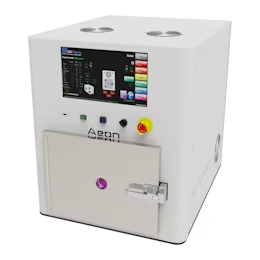
- Aeon — a table-top batch system suited to lab qualification and lower-volume production, covering organic-contamination removal and plastics activation and functionalisation ahead of bonding without a full production-line footprint.
- Juno — a batch system whose reconfigurable shelves adapt to almost any part shape, so bulkier or awkwardly shaped parts and mixed geometries are activated and bonded together in one chamber rather than one at a time.
One timing detail matters regardless of system: a plasma-activated surface doesn't stay activated indefinitely. Surface energy decays over time after treatment — hydrophobic recovery — and dust or handling contamination can reaccumulate. Parts should be bonded promptly after plasma treatment, or held in a controlled environment if there's an unavoidable delay between the plasma step and the adhesive dispense.
Verification
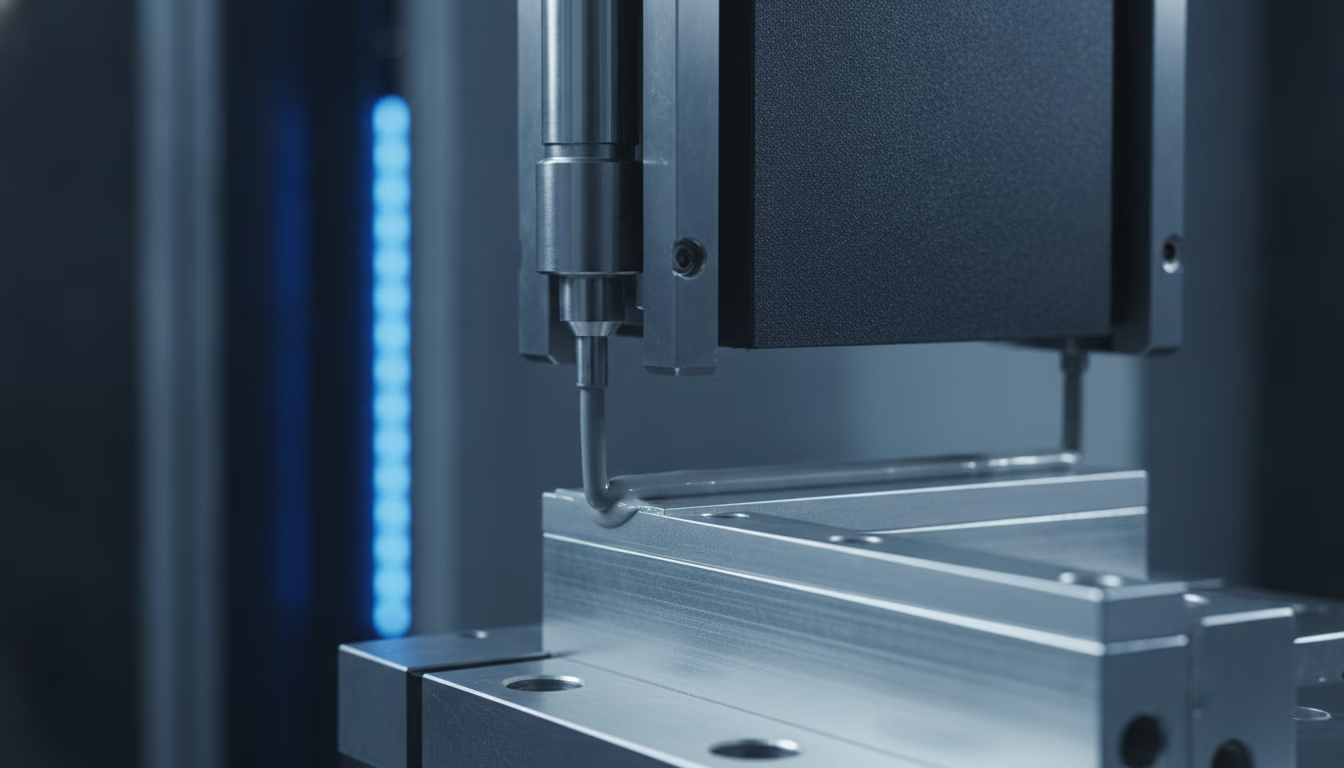
Contact-angle measurement before and after plasma treatment is the fast, direct check that the surface-energy shift actually happened — a treated part that still resists wetting means the chamber or recipe needs attention before it reaches the bonding station. On cured, bonded samples, a peel or lap-shear test ties the plasma step back to the metric that actually matters: bond strength. Trending that data across production batches catches a drifting plasma recipe before it shows up as a field failure months after the parts have shipped.
Recommended systems
Related industries
Related articles
The Uses of Plasma Cleaning Prior To Epoxy Bonding
Plasma treatment is a critical step in ensuring the efficacy and durability of epoxy bonds in various industrial applications. Its...
Plasma Treatment for Enhanced Polymer Bonding
In today's fast-evolving industries, from automotive to biomedical devices, the demand for strong, durable, and reliable polymer bonding...
A Look into Plasma Treatment for Superior Plastic Adhesion
Plasma treatment of plastics to improve surface wettability and increase adhesion for printing, painting, and gluing plastic parts.
Frequently asked questions
Why do adhesive bonds fail even when the right epoxy was used?
Most bond failures trace back to the surface, not the adhesive: low-surface-energy materials like polyethylene and PTFE are chemically inert and don't wet properly, and contamination — oils, dust, mould-release residue — sits as a physical barrier between the adhesive and the part regardless of how well the adhesive itself was formulated.
What does plasma cleaning actually do to prepare a surface for bonding?
It removes contamination through physical sputtering and chemical reaction with the process gas, microscopically etches the surface to increase the bonding area, and raises the surface energy of the material so it's more chemically reactive toward the adhesive.
Why does plasma treatment matter more for plastics than metals?
Non-polar polymers like polyethylene and PTFE have no functional groups on the surface for an adhesive to bond to. Plasma surface activation introduces those functional groups directly, which is what makes an otherwise inert plastic bondable.
How soon after plasma treatment does a part need to be bonded?
Promptly. Surface energy decays over time after treatment — hydrophobic recovery — and contamination can reaccumulate, so parts should be bonded soon after plasma treatment or held in a controlled environment if there's an unavoidable delay.
Which plasma system fits an adhesive-bonding line?
Aeon is a table-top batch system suited to lab qualification and lower-volume production; Juno's reconfigurable shelves take bulkier or awkwardly shaped parts and mixed geometries in one batch.