

Plasma Desmear for Multilayer PCB Vias
A via that fails continuity after thermal cycling almost never started as a drilling defect. It started as resin smear that plasma never got the chance to clear before plating.
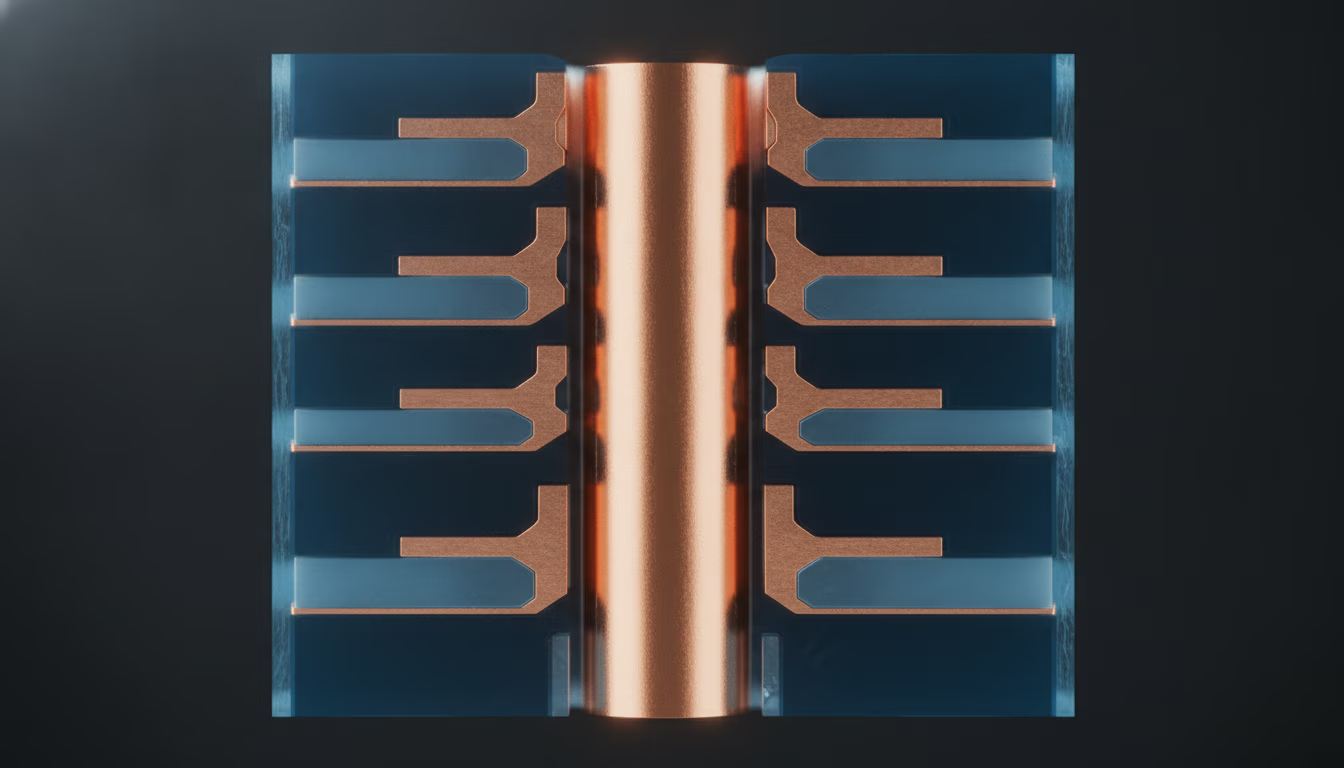
Multilayer PCBs get their layer-to-layer connections from drilled vias — small holes mechanically drilled through the board and then plated with copper to link the copper traces on different layers. Drilling generates friction and heat, and that heat melts a thin smear of the board's own epoxy resin across the exposed copper on the inside wall of every hole it passes through. Left in place, that smear sits directly between the plated via barrel and the internal copper layer it's supposed to connect to. The plating step isn't the source of a weak or open via in that case — the hole wall it's plating onto is.
Why resin smear breaks the via before plating starts
A drilled via only works as an interconnect if the copper plated into it makes solid metallic contact with every internal copper layer the hole passes through. Resin smear coats that exposed copper in a thin, non-conductive film without stopping plating from happening — it stops the plating from bonding to the layer underneath. The defect doesn't show up as a missing via; it shows up as a via with abnormally high resistance, or one that passes initial continuity and fails later, once thermal cycling has worked the marginal contact open. On boards with fine-pitch, high-layer-count stacks, the margin for a marginal via is already thin before smear adds to it.
How plasma clears the smear without touching the copper
Plasma desmear treats the resin the same way an oxygen-based plasma treats organic residue anywhere else in the process: the gas is ionized into reactive species that attack carbon-based material chemically, converting it into volatile byproducts removed through the vacuum system, rather than mechanically abrading it away. Because the reaction is chemically selective to organic material, it etches the epoxy smear off the exposed copper without removing the copper itself — the same principle that lets a controlled oxygen plasma strip a thin residual layer off a surface without damaging the structure underneath it. What the process adds beyond removal is a controlled roughening of the resin around the hole wall, giving the subsequent copper plating more surface area to key into instead of a smooth wall it has to adhere to along a single, unbroken interface.
The same precision-versus-throughput trade-off that shows up across dry-etch applications generally applies here too. A liquid, immersion-based process removes material by exposure time and concentration, effective for bulk removal but largely indifferent to the local geometry of an individual hole. A dry, plasma-based etch instead couples energy and chemistry directly to the gas and RF power applied, giving finer control over how much material comes off a given hole wall — the same reason dry, ion-driven etch processes are favoured over wet immersion wherever pattern fidelity in a small, high-aspect-ratio feature matters more than raw throughput.
Where plasma desmear sits in the process
Desmear is a dry step, introduced immediately after drilling and before electroless copper deposition begins. It doesn't touch the board's copper traces or components, and it adds no wet-chemical rinse or disposal stream to the line. The right system depends on the substrate and how much plasma energy the resin needs to clear completely:
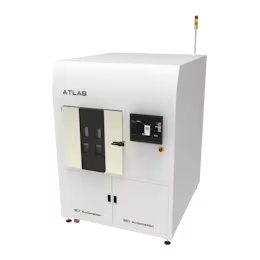
- Atlas — a batch plasma system available with a chamber configuration built specifically for the job: four holders for PCB desmearing, offered as an alternative to Atlas's standard multi-shelf layout, alongside the same specific gas-distribution system used across the Atlas line to reach plasma into complex geometries. Atlas's own designation for this configuration is a plasma desmearing system in its own right.
- Aeon-HP — a high-power batch system built for sustained, higher-energy plasma processes. Integrated temperature monitoring and a purpose-built heat dissipation system keep it running continuously without the part or chamber overheating, which matters on resin that needs more energy and more dwell time to clear fully than a standard cleaning cycle.

Verifying the via wall
Because a residual smear defect sits inside a drilled hole, it isn't something a visual inspection of the board surface catches. The standard check is a cross-section: a sample via is cut, mounted and polished so the hole wall is visible under a microscope, confirming the resin has been cleared back to clean copper at every internal layer the via passes through. On the finished, plated board, a continuity or resistance check across the via ties the desmear step back to yield — a via that reads high resistance or fails continuity on an otherwise well-drilled board is the signal to look at the desmear recipe, not the plating line.
Related industries
Related articles
Plasma Descum: Learn What It Is And How It Works
Explore the fascinating world of plasma descum, understanding its pivotal role in today's advanced technological applications and its transf

Sapphire Etching: Techniques, Innovations & Comparisons
Sapphire is revered in the manufacturing world for its exceptional hardness and durability. This mineral, a crystalline form of aluminum...
Frequently asked questions
Why does a via fail continuity even though the board was drilled correctly?
Drilling generates heat that melts a thin smear of epoxy resin across the exposed copper inside the hole. If that smear isn't cleared before plating, the copper plated into the via never makes solid contact with the internal layer — the via often still plates, but with abnormally high resistance or a connection that opens later under thermal cycling.
What does plasma desmear actually do to the hole wall?
It ionizes a process gas into reactive species that chemically break down the epoxy smear into volatile byproducts, etching it off the exposed copper without removing the copper itself, and roughening the hole wall slightly so the subsequent copper plating has more surface to key into.
How is plasma desmear different from a wet chemical desmear process?
A wet, immersion-based process removes material by exposure time and concentration and treats every via much the same way regardless of local geometry. A dry, plasma-based etch couples energy and chemistry more precisely, giving finer control as hole diameters shrink and aspect ratios increase.
Which SCI Plasma system is set up for PCB desmear?
Atlas is available with a dedicated four-holder chamber configuration built specifically for PCB desmearing, as an alternative to its standard multi-shelf layout. Aeon-HP, a high-power system with integrated temperature monitoring and heat dissipation, suits resin that needs more energy or dwell time to clear.
How do you verify a via was properly desmeared?
A cross-section of a sample via, polished and inspected under a microscope, confirms the resin has been cleared back to clean copper at every internal layer. On the finished, plated board, a continuity or resistance check across the via ties the desmear step back to yield.